Load and equipment selection
Cabin volume, glazing, insulation, occupancy, climate, vessel use, and existing performance help determine appropriate cooling capacity and equipment configuration.
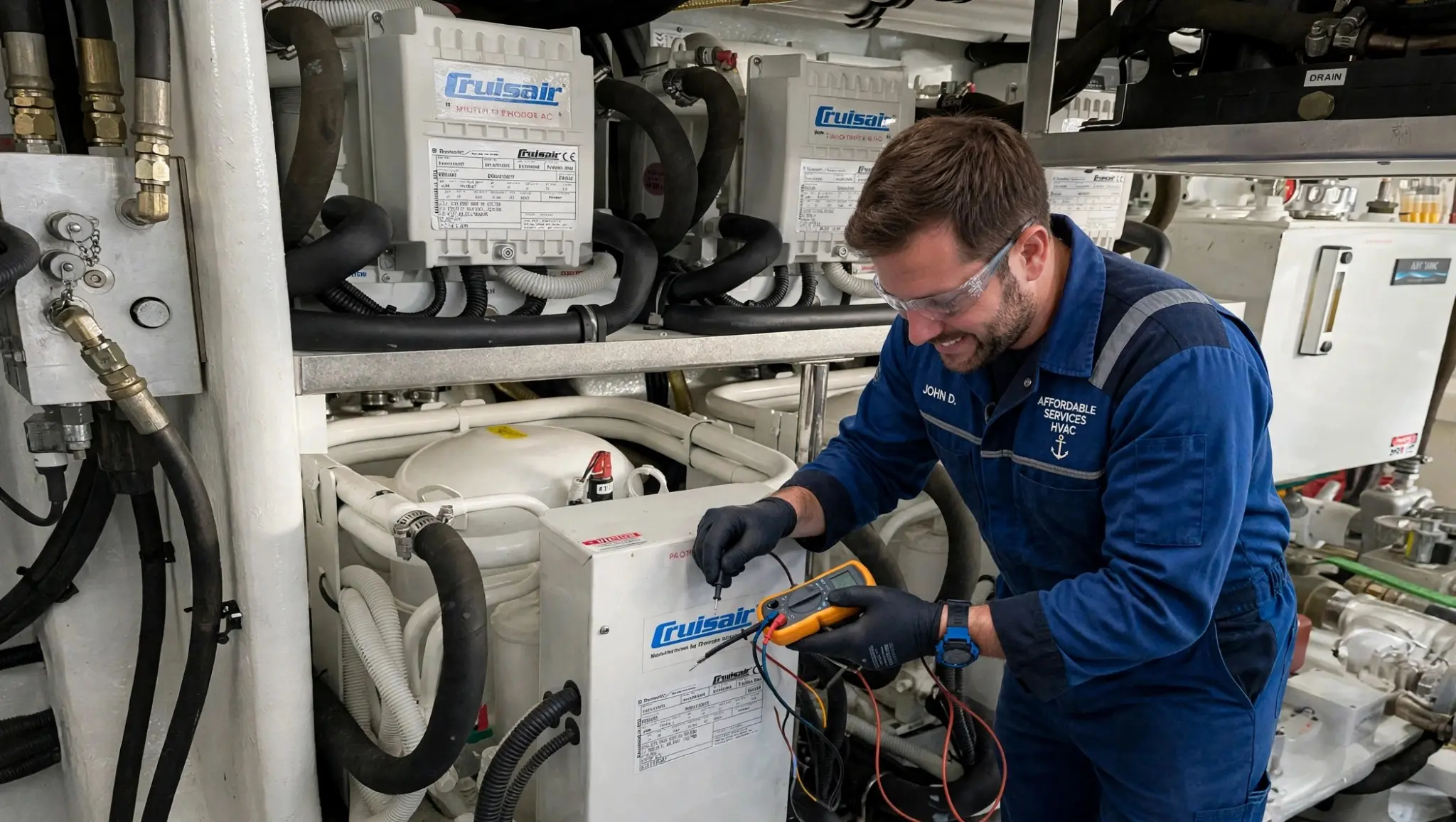
Marine AC replacement
Successful marine air-conditioning replacement depends on capacity, voltage, seawater circulation, ductwork, condensate management, controls, machinery-space access, and future serviceability.
Cabin volume, glazing, insulation, occupancy, climate, vessel use, and existing performance help determine appropriate cooling capacity and equipment configuration.
We review electrical supply, breaker capacity, seawater pump and piping, duct size, return airflow, condensate routing, control wiring, and physical access.
When technical guidance is needed, we work with equipment support channels to confirm compatibility, controls, installation requirements, and available replacement options.
Jersey Shore service area
Visit a local service page for waterway-specific information, maps, and scheduling guidance.
Service answers
Often, yes, but the correct solution depends on voltage, capacity, dimensions, ducting, seawater flow, controls, and available installation access.
We evaluate chilled-water components, circulation, air handlers, controls, cooling load, and equipment options before defining the replacement scope.
No. We begin with diagnosis. Repair may be appropriate when the core equipment remains sound and parts are available.
Talk with a marine systems specialist